

TITLE
Prokaryotic community structure and auxin biosynthesis in early developmental stages of farmed Atlantic Nori (Porphyra spp.)
JOURNAL
Frontiers in Microbiology
AUTHORS
André C. Pereira, Daniela Leuzzi, Enrico Nanetti, Francisco Cortez, Guilherme Chaves, Helena Abreu, Inês Oliveira, Madalena C. Mendes, Margarida Martins, Ricardo B. Leite, Rodrigo Costa e Tina Keller-Costa.
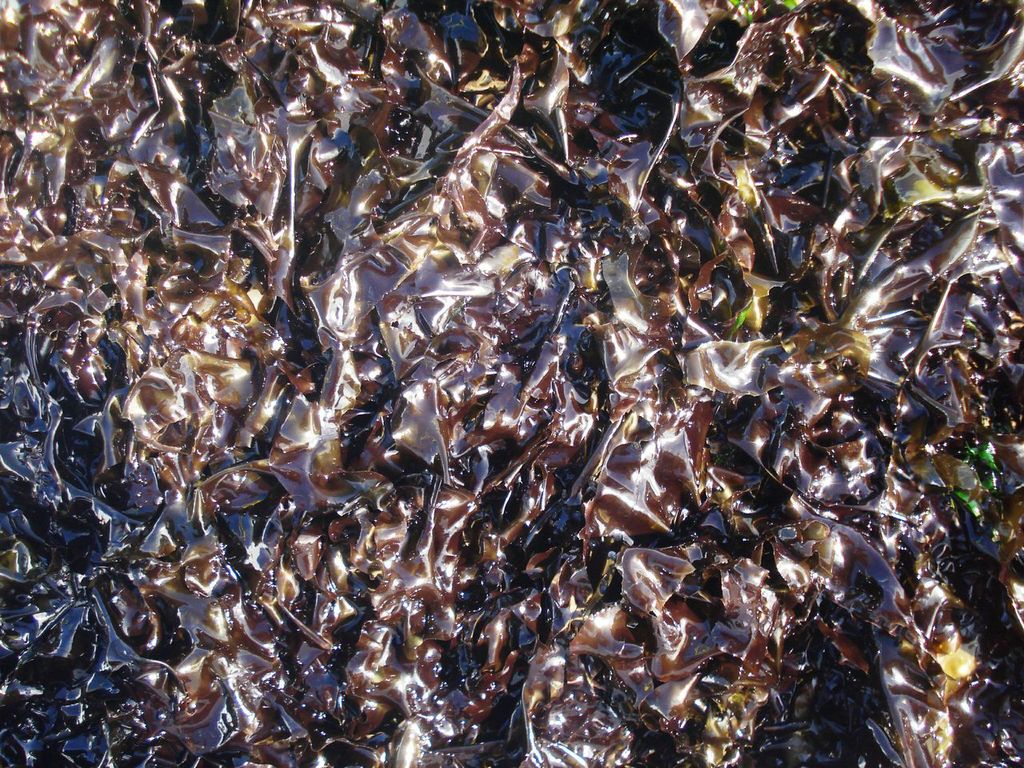
Algal-microbiome interactions are considered pivotal for host health and development. Current understanding of the diversity and function of algal-associated microorganisms in aquaculture settings remains limited, preventing the development of microbiome-based solutions for sustainable algal growth. We employed cultivation-dependent and -independent approaches to determine the structure of bacterial communities associated with farmed Atlantic Nori (Porphyra dioica and Porphyra umbilicalis) at early developmental stages. 16S rRNA gene amplicon sequencing and cultivation of bacterial symbionts were performed for algal and culturing water samples harvested from indoor photobioreactors at stages S1 (conchocelis cultures growing vegetatively), S2 (conchosporangia), and S3 (young blades). The phyla Pseudomonadota (Alpha-and Gammaproteobacteria classes) and Bacteroidota were dominant in algal samples, followed by Planctomycetota, Actinobacteriota, and Verrucomicrobiota. At the phylotype level, these communities were highly structured throughout the host’s life cycle. Uncultivated lineages Sva0996 (Actinomycetota), OM190 (Planctomycetota), Pir4 (Planctomycetota), and the genera Blastopirellula, Algoriphagus, Hyphomonas, and Marinobacter, among others, were enriched in algal samples and presented significantly different abundances across developmental stages. In some cases (e.g., genera Aquimarina, Sulfitobacter, Maribacter, and Nonlabens), those changes were also observed in culturing water. Moreover, the genera Ensifer (Rhizobiaceae), Paraglaciecola (Alteromonadaceae), and the uncultivated lineages DEV007 (Verrucomicrobiota) and Pir4 (Planctomycetota) were consistently present in P. dioica and P. umbilicalis samples at multiple developmental stages. Several Porphyra-associated bacterial genera and putative novel species, mostly belonging to the families Roseobacteraceae, Flavobacteriaceae, and Alteromonadaceae were identified via cultivation. Many cultured members of the Porphyra microbiome produced the growth-promoting hormone auxin, particularly those belonging to the genera Alteromonas, Marinobacter, Sulfitobacter, Leucothrix, and Roseovarius. This study unveils complex, phylogenetically distinct, and temporally structured bacterial communities possessing algal morphogenesis-inducing capacities during early developmental stages of Porphyra spp., highlighting the potential of microbiome-based interventions for sustainable growth of marine algae in aquaculture.