

TITLE
Do toxic epiphytic microalgae compromise the consumption of edible macroalgae?
JOURNAL
Journal of Applied Phycology
AUTHORS
Tomás Chainho, Rui Cereja, Miguel Barbosa, Maria João Xavier, Alícia Pereira, Inês Oliveira, Madalena C. Mendes, António Marques, Pedro R. Costa
ABSTRACT
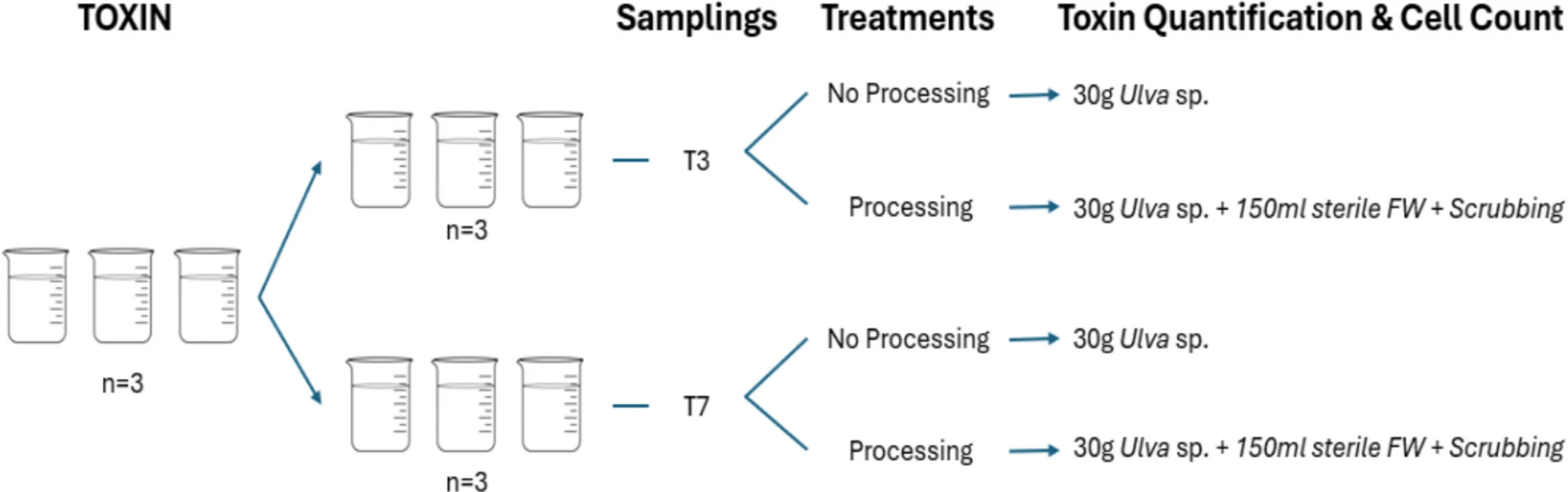
The growing global demand for farmed macroalgae highlights the need to better understand potential contaminant loads, including toxins from harmful algal blooms, and their implications to human health. In this study, the green macroalga Ulva rigida was co-cultivated with the epiphytic dinoflagellate Prorocentrum lima to determine whether toxins produced by the toxic dinoflagellate accumulate in the macroalgae and assess the efficacy of post-harvest processing techniques to reduce or eliminate the risk of toxins contamination. Ulva rigida (60 g wet weight) was maintained under controlled laboratory conditions in sterile F/2 medium and in co-culture with P. lima. Macroalgae were divided into two treatments: a) no processing; b) processing. Samples were analysed by LC-MSMS to detect okadaic acid (OA) and dinophysistoxin-1 (DTX1). High toxins levels were detected after 7 days of exposure to P. lima. Contrastingly, the post-harvesting process of washing and scrubbing was efficient in reducing toxins loads, indicating that lipophilic toxins were surface bound and can be easily eliminated using efficient post-harvest processes. The results indicate that epiphytic toxic microalgae may jeopardize the consumption of macroalgae, particularly if appropriate post-harvest processes are not applied to ensure the safety of farmed macroalgae for consumers.
Back to Publications