


CHAPTER TITLE
Microalgae and macroalgae as functional ingredients in fish nutrition
AUTHORS
C. Aragão, R. Teodósio, A.T. Gonçalves, and S. Engrola
BOOK
Novel protein and lipid sources in animal nutrition: Applications in aquaculture, livestock feed and pet food
PUBLISHER
Wageningen Academic
ABSTRACT
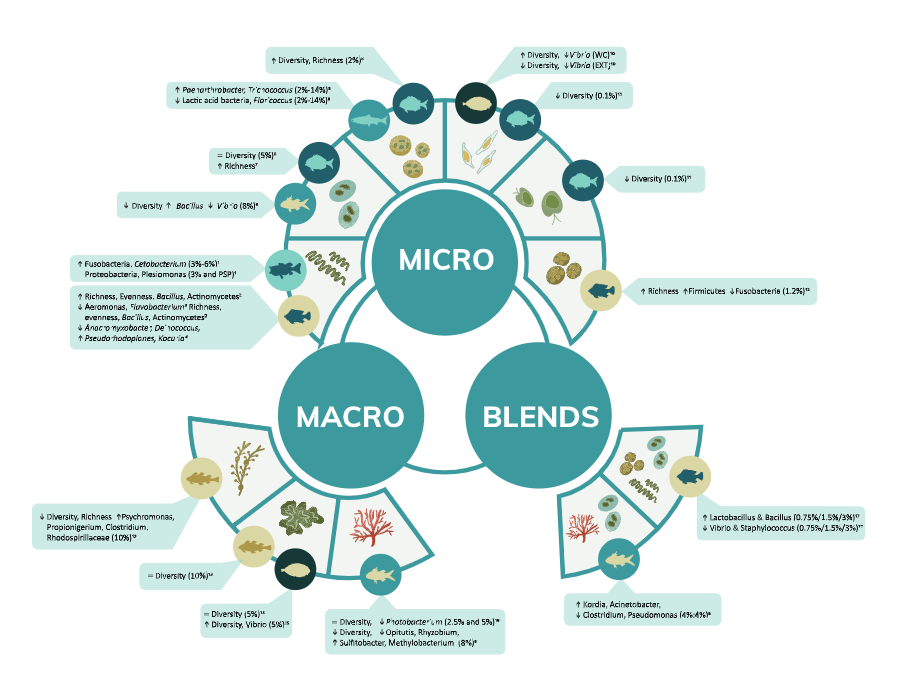
Micro- and macroalgae have gained increasing attention as functional ingredients in aquafeeds due to their rich content of bioactive compounds and potential to improve fish health. In this context, they are not valued primarily as sources of dietary protein or energy, but as functional ingredients, typically used at low inclusion levels to deliver specific health benefits. This chapter reviews the functional roles of micro- and macroalgae in aquaculture, focusing on their effects on health, immune function, antioxidant status, and gut microbiota composition across different fish species. Microalgae consistently improve gut morphology, hematological parameters, and immune and antioxidant responses, particularly under stress or disease challenge. They also modulate gut microbiota composition, promoting microbial diversity and the abundance of beneficial taxa, although outcomes depend on species-, dose-, and processing-form. Macroalgae and their extracts stimulate immune function, but their effects on oxidative balance and microbiota are more variable. While some whole macroalgae show limited or inconsistent effects, proprocessed forms and extracts, especially at low inclusion levels, tend to produce clearer immunological and microbiome-related benefits. Despite these promising results, the broader use of algae in fish feeds faces persistent challenges, including high production costs, scalability issues, and inconsistent biomass composition, especially in the case of macroalgae. Addressing these constraints will require standardized and cost-efficient production systems, and the application of precision nutrition principles to align algal inclusion with the specific nutritional requirements of the target fish species and their farming conditions. Overall, integration of algae-based ingredients into aquafeeds can enhance fish robustness, support immune and antioxidant defences, and positively modulate the gut microbiota. With appropriate formulation and processing, micro- and macroalgae hold strong potential as key sustainable components of functional diets designed to improve fish health and resilience in aquaculture.
Back to Publications