


TITLE
Influence of centrifugal pumps on Limnospira platensis cultivation: from impact on growth and morphology to a two‑stage industrial cultivation strategy
JOURNAL
Journal of Applied Phycology
AUTHORS
Inês Guerra, Helena Cardoso, Margarida Costa, Mafalda Trovão, Joana Silva & João Varela
ABSTRACT
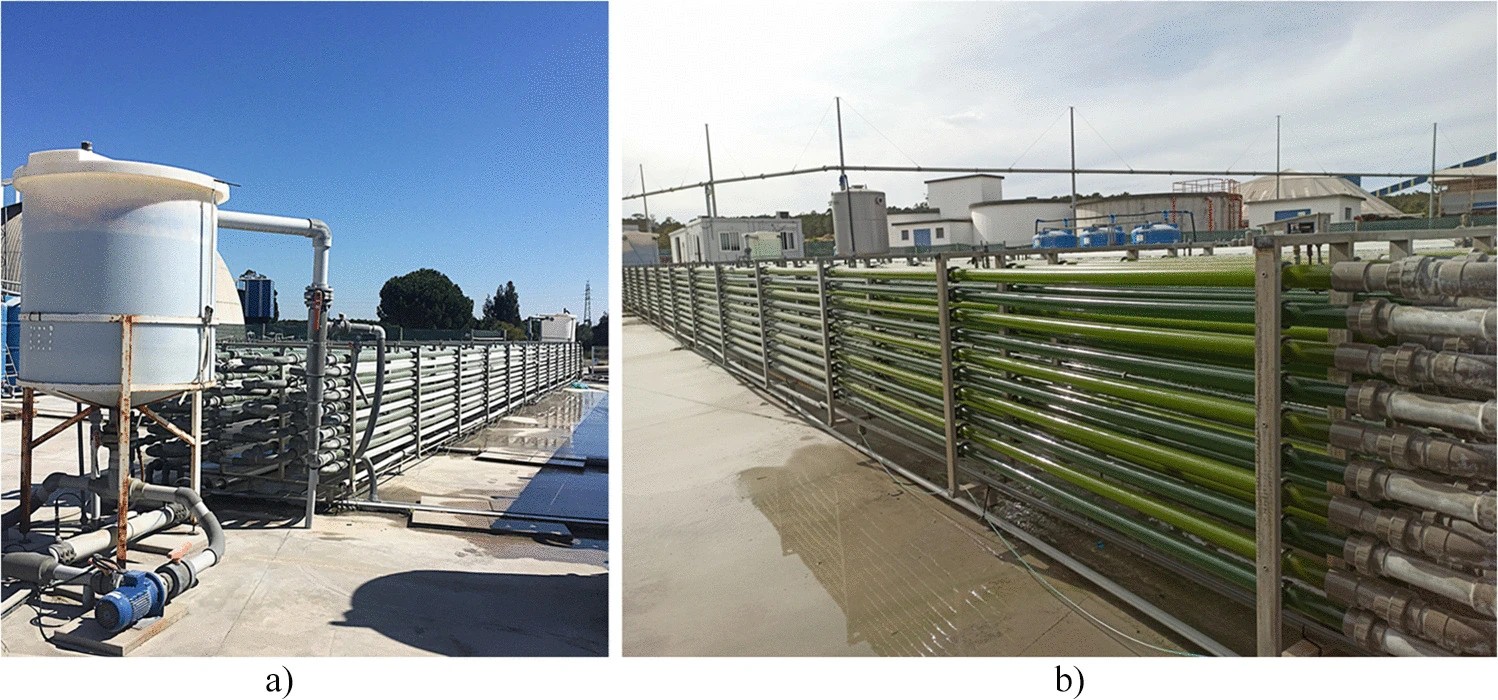
Centrifugal pumps are widely used in tubular photobioreactors (PBRs) due to their efficiency, but they generate significant hydrodynamic stress, which can affect filamentous microalgae like Limnospira platensis. This study analyzed the effect of such stress on L. platensis cultivation at both pilot- (2.6 m3) and industrial- (120 m3) scales. The culture’s productivity was assessed, together with filament integrity, biochemical composition (protein and phycocyanin), and energy use. In the pilot-scale tubular PBR, the pump caused rapid filament fragmentation, with 90% of the filaments smaller than 200 μm within 24 h. Yet, the culture maintained a high volumetric productivity of 0.154 g L⁻1day⁻1, three times higher than the 0.049 gL⁻1day⁻1of the raceway ponds. When transferred to a low-shear RW, filament length demonstrated rapid recovery, with more than 40% of the filaments longer than 200 μm after just 6 days. At the industrial scale, filament breakage was less severe, but energy use was 50 times higher than in the industrial raceways. A scale-up model showed that using tubular PBRs for inoculum production speeds up the scale-up process by 13 days. These results show that shear forces from centrifugal pumps change filament morphology, but do not compromise the culture’s productivity or long-term viability, positioning the use of tubular PBRs as a strategic approach for fast inoculum production in a hybrid cultivation system.
Back to Publications