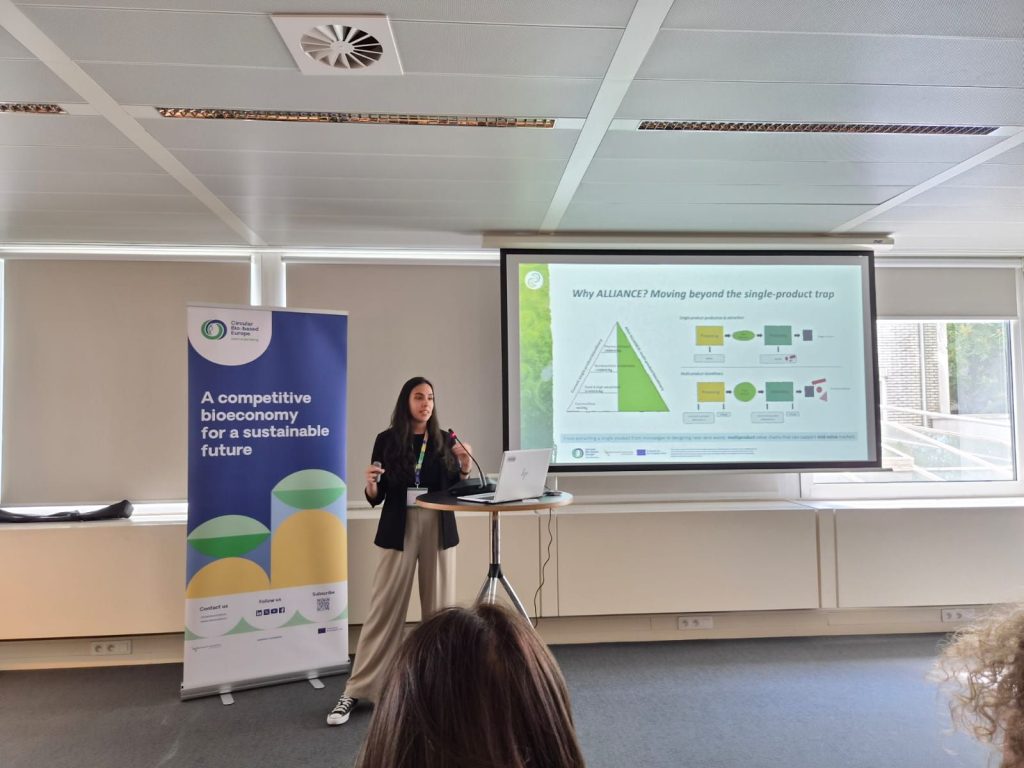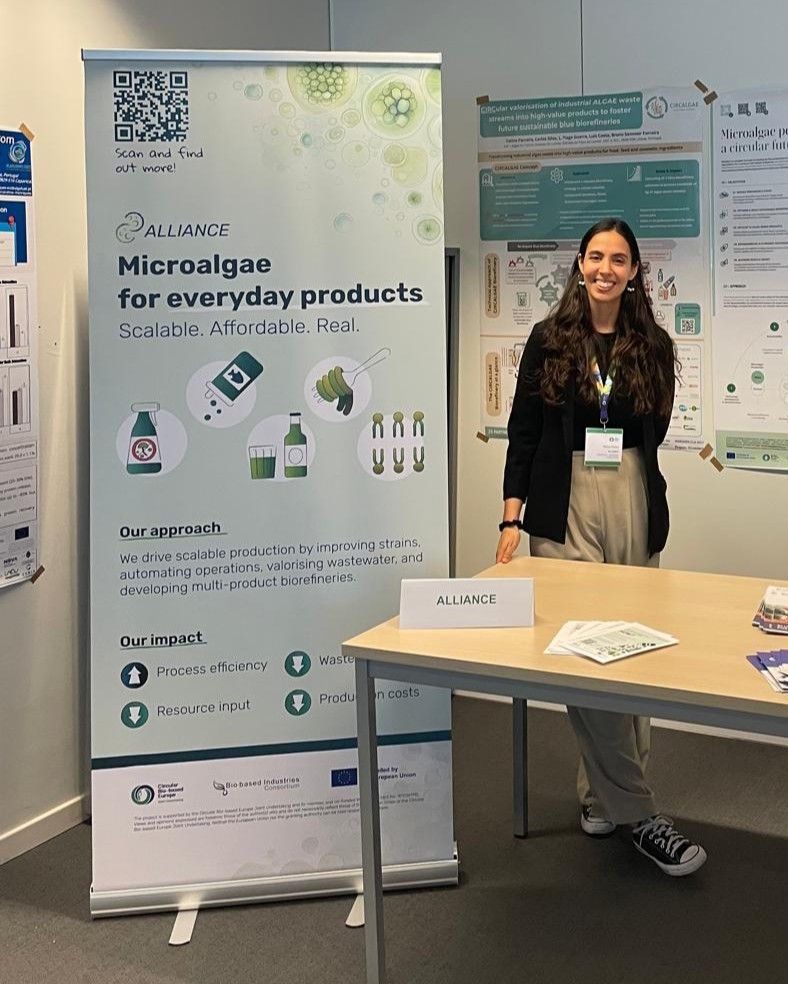


GreenCoLab was represented at the Circular Bio-based Europe Joint Undertaking (CBE JU) Cluster Workshop on Bio-based Food and Feed Innovation, held in Brussels, by Mariam Kholany, Biorefinery Leader, as part of the European Microalgae ALLIANCE project.
The event brought together approximately 60 participants, including researchers, industry representatives, European Commission officials, and other bioeconomy stakeholders, to promote collaboration among European projects developing innovative solutions for the human food, animal feed, and nutraceutical sectors. In total, 37 projects funded by the CBE JU, Horizon Europe, and other European research and innovation initiatives participated.
Structured into three thematic sessions, the workshop addressed the development of sustainable bio-based ingredients, the potential of aquatic biomass and algae, and the growing role of alternative proteins in building more sustainable and resilient food systems. During the session dedicated to aquatic resources, the Microalgae ALLIANCE project presented its latest developments, alongside other European initiatives focused on the valorization of marine biomass, demonstrating the contribution of microalgae to the production of high value-added ingredients and to reducing pressure on terrestrial resources.
The discussions highlighted some of the main challenges for bringing new bio-based ingredients to market, notably the regulatory processes associated with the Novel Food Regulation and legislation on feed additives, as well as the need to accelerate industrial scale-up, strengthen investment, and promote greater consumer acceptance. The importance of close cooperation between researchers, industry, policymakers, and regulatory authorities to create a framework conducive to innovation was also emphasized.
In addition to the technical component, the workshop served as an important networking platform, enabling the identification of synergies among European projects and promoting new opportunities for collaboration in strategic areas of the bioeconomy.
GreenCoLab’s participation in this meeting reinforces the institution’s and the Microalgae ALLIANCE project’s commitment to developing innovative microalgae-based solutions that contribute to more sustainable, resilient, and resource-efficient food systems, in line with the objectives of the European circular bioeconomy.