

CHAPTER TITLE
Microalgae and macroalgae as functional ingredients in shrimp nutrition
AUTHORS
A. Barreto, A. T. Gonçalves, R. J. M. Rocha
BOOK
Novel protein and lipid sources in animal nutrition: Applications in aquaculture, livestock feed and pet food
PUBLISHER
Wageningen Academic
ABSTRACT
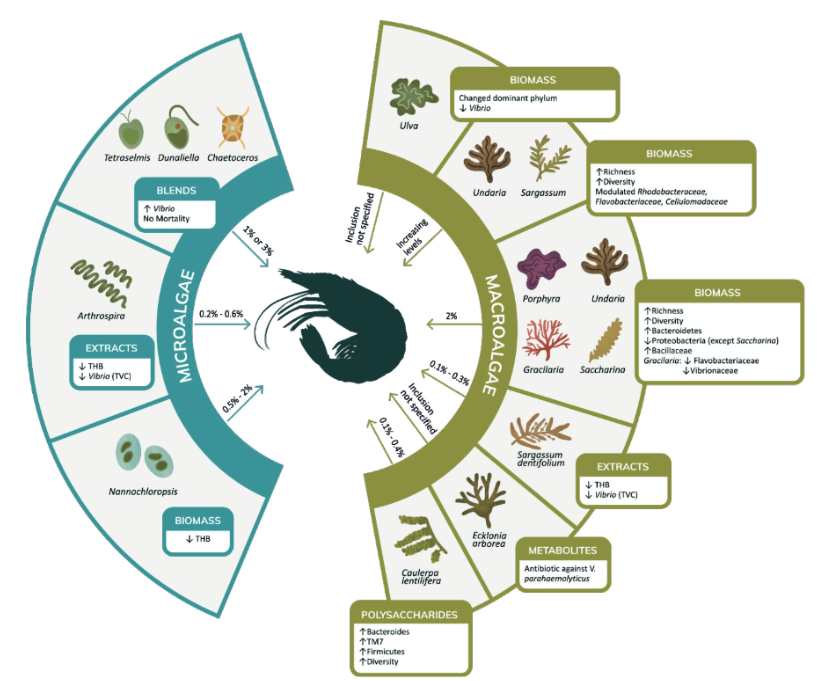
Both microalgae and macroalgae are increasingly valued as functional ingredients in shrimp aquaculture, combining balanced nutrition (proteins, essential fatty acids, vitamins, minerals) with diverse bioactive compounds such as carotenoids, phycobiliproteins, polysaccharides, β-glucans, and polyphenols. In the whiteleg shrimp (Penaeus vannamei), the world’s leading farmed crustacean, dietary inclusion at low levels (<15%) consistently enhances immune competence (e.g., hemocyte count, lysozyme, phenoloxidase activity), improves gut health, supports oxidative balance, and increases resistance to bacterial and viral pathogens, while also conferring resilience against stressors such as salinity shifts, temperature fluctuations, hypoxia, and heavy metals. Outcomes vary according to ingredient form (whole biomass, extracts, fractions, fermented derivatives), algal group, dose–response dynamics, feeding duration, and feed processing technologies such as vacuum coating and low- or high-temperature extrusion. Algae further modulate the gut microbiota, acting as prebiotic substrates and quorum-sensing modulators that stabilize microbial communities, reduce Vibrio abundance, and enhance performance and survival. Future advances will require standardized methods for characterizing algal bioactives, reducing variability across species and processing, and integrating multi-omics tools to better link mechanisms with outcomes. In parallel, techno-economic and life-cycle assessments are essential to evaluate scalability and sustainability. In summary, beyond summarizing the outcomes, this chapter explores the underlying mechanisms, species-specific responses, and future directions for the strategic use of algal ingredients, positioning them as key contributors to the sustainability, resilience, and innovation of modern shrimp aquaculture.